

한국의 핵무장 추진 시 국제 규범 위반 문제와 현실적인 핵 억제력 강화 방안
Issue of Violating International Norms in Case of South Korea’s Nuclear Build-Up for Military Purpose, and Realistic Ways to Strengthen Nuclear Deterrence
제1권 제1호 · pp. 81-103 · 2023. 6. 30. 발간
저자
- 제1저자신동익前 주오스트리아 대사, 現 연세대 국제대학원 객원교수, 한국원자력안전기술원(KINS) 대외정책자문위원
소속은 투고 시점에 저자가 적어 낸 그대로입니다. 발간본에 교신저자 표시가 없는 호는 첫 저자를 제1저자로, 나머지를 공동저자로 적었습니다.
서지 사항
게재 권호
제1권 제1호 · pp. 81-103 · 23쪽
발간일
2023. 6. 30.
ISSN
2983-1547
DOI
부여 예정
이용 허락
CC BY-NC 4.0 · 저작자와 출처를 표시하면 누구나 비영리 목적으로 복제·배포·전송·번역·개작할 수 있습니다. 영리 이용은 발행처와 협의합니다. 발행 및 투고 규정 제13조 제7항 (2026. 9. 7. 개정안 · 의결 후 표시)
분야
확인 중
투고일 · 심사일 · 게재확정일
투고일신청자격 5항 ➋
2023-04-04
심사일
확인 중
게재확정일
2023-05-27
심사일은 발간본에 적혀 있지 않아 아직 비어 있습니다. 발간본과 심사 기록을 맞춰 본 뒤 채우고, KCI에도 세 일자를 함께 등록합니다.
초록과 주제어
북한의 핵 위협이 점증함에 따라 한국 내 핵무장 추진 여론이 높아지고 있는 상황에서 만약 한국이 핵비확산조약(NPT)을 탈퇴하고 핵개발을 할 경우 국제사회에서 어떠한 제재를 받게 되는지와, 핵개발을 하지 않고 북한 핵에 대비하기 위해 핵보유 동맹국인 미국으로부터 어떻게 실질적적인 핵억제 능력을 제공받을 수 있는지에 대해 논의 해 본다. 2023년 4월 26일 워싱톤에서 개최된 한·미 정상회담에서 양국은 ‘워싱턴 선언’을 발표하여 ‘핵협의그룹(NCG)’을 통해 확장억제 능력을 강화해 나가기로 합의하고, 한국은 NPT 의무 준수를 재확인하였다. 이로써 한국의 핵개발에 대한 논란은 대외적으로 일단락된 것으로 보인다. 그러나, 미래에 한국이 핵개발을 추진하게 된다면 어떠한 상황이 발생할지는 가정해 볼 수 있다. 즉, 한국이 핵개발을 한다면 NPT 등 다양한 비확산 국제규범을 위반하게 되므로 유엔 안보리, 국제원자력기구(IAEA) 등 관련 국제기구는 물론이고 아니라 미국 등 국제사회로부터 제재를 받게될 것이다. 이로 인해 대외 무역에 의존하고 있는 한국 경제는 파탄이 나고, 주요 에너지원인 원자력 발전 원료 수입도 영향을 받게 되어 사회 인프라도 정상적으로 가동이 되지 못할 것이다. NPT 체제하에서 북한 핵에 대응할 수 있는 현실적인 대안으로 미국의 전술핵 재배치, 확장 억제능력 강화, 핵공유, 원자력 잠수함 도입 등을 고려할 수 있다. 선택 안들의 장·단점을 검토하고 미국의 기존 핵정책을 감안해 볼 때 한·미 상호방위조약에 근거하여 미국의 전략자산을 신속히 배치토록 하는 확장억제(extended nuclear deterrence) 강화가 현실적으로 최선이 될 것 같다. 결국 NPT 체제하에서 핵무기 비보유국인 한국으로서는 북한의 핵사용 조짐이 있거나 실제 공격을 받을 경우 미국이 핵으로 즉각 대응할 수 있는 체계를 갖추도록 하는 것이 핵심이다. 한국의 자체 국방력과 4.26 한미 정상회담에서 합의된 핵협의그룹(NCG)을 통해 한·미 확장억제력 능력을 강화시키는 동시에 북한이 핵협상에 나올 수 있도록 우방국들 및 중국, 러시아와의 외교적 노력도 잊지 말아야 할 것이다.
Abstract
Responding to North Korea’s increasing nuclear threat, public opinion in favor of nuclear option has been heightened in South Korea. In this paper, it will be discussed what kind of sanction measures the international community will impose on South Korea if it withdraws from the Nuclear Non-Proliferation Treaty(NPT) and decides to develop nuclear weapons. Also it will be considered how South Korea will get extended nuclear deterrence fully from the United States, which is South Korea’s strong ally with nuclear weapons, instead of developing its own nuclear weapons to counter North Korea’s nuclear threat. On April 26, 2023, the ‘Washington Declaration’ was announced at the US-ROK Summit in which both countries agreed to strengthen extended nuclear deterrence through the Nuclear Consultative Group (NCG), and South Korea reaffirmed its commitment to obligations of the NPT. By the joint ‘Washington Declaration’, it appears that issues relating to South Korea’s nuclear development has submerged under the water. However, It is noteworthy to assume that South Korea will meet severe consequence if it will pursue developing nuclear weapons in the future. South Korea will be under sanction from the UN Security Council, International Atomic Energy Agency (IAEA) and relevant international organizations since it will violate various international norms including the NPT. In addition, the US and ma- jor power countries in the world will impose bilateral sanctions on South Korea. By those sanctions, South Korean economy which depends on international trade will be crippled, and electricity infrastructure will not be able to run normally since import of nuclear fuel material which is main resource for nuclear power plant will be restricted. Under the circumstance, South Korea’s realistic options such as strengthening extended nuclear deterrence, re-deployment of US tactical nuclear weapons, nuclear sharing and purchase of nuclear submarine can be considered within the NPT system to counter North Korea’s nuclear threat. When we review pros and cons of those options and consistent US nuclear policy, upgrading extended nuclear deterrence based on the US-ROK mutual defence treaty seems to be realistically best option as it can ensure rapid deployment of the US strategic assets such as nuclear submarine, B-1B bomber and aircraft carriers in crisis situation. Core issue is how South Korea as a non-nuclear NPT state will prepare immediate counter capability with the US nuclear deterrence to respond swiftly to any sign of North Korea’s provocation or possible North Korea’s nuclear attack on South Korea. At the same time, it is also important to make diplomatic efforts together with the US, China and other countries concerned in order to induce North Korea for nuclear negotiation while strengthening South Korea’s national defense power together with the US extended nuclear deterrence through the NCG mechanism which was agreed at the US-ROK Summit in April 2023.
주제어국문
Keywords영문
인용 형식
APA
신동익. (2023). 한국의 핵무장 추진 시 국제 규범 위반 문제와 현실적인 핵 억제력 강화 방안. 원자력전략·정책연구, 1(1), 81-103.
한국어 서지 형식
신동익, 「한국의 핵무장 추진 시 국제 규범 위반 문제와 현실적인 핵 억제력 강화 방안」, 『원자력전략·정책연구』 제1권 제1호 (2023), 81-103쪽.
DOI를 부여하면 두 형식 끝에 DOI 주소를 함께 적습니다. 그때까지는 이 화면의 주소 https://nespr.wokz.kr/articles/1105 로 인용하실 수 있습니다.
원문
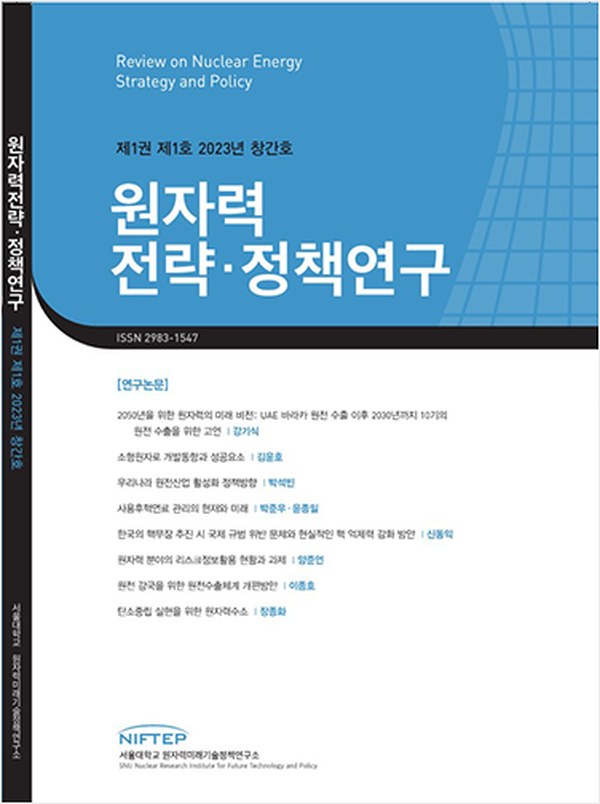
게재가 확정된 논문의 원문은 발간과 동시에 무상으로 공개합니다. 로그인이나 회원 가입 없이 연구소 홈페이지에서 해당 호 발간본을 내려받아 보실 수 있습니다. (발행 및 투고 규정 제13조 제5항)
제1권 제1호 · pp. 81-103 · 발행기관 서울대학교 원자력미래기술정책연구소
같은 호에 실린 다른 논문
- pp. 1-18강기식
- pp. 19-35김윤호
- pp. 37-59박석빈
- pp. 61-80박준우, 윤종일
- pp. 105-116양준언
- pp. 117-137이종호
- pp. 139-158장종화