

원자력 및 핵 시설 군사공격의 국제법적 쟁점과 정책적 함의
Military Attacks on Nuclear Facilities: International Legal Issues and Policy Implications
제4권 제1호 · pp. 83-102 · 2026. 6. 30. 발간
저자
- 제1저자이병철경남대학교 극동문제연구소 조교수
소속은 투고 시점에 저자가 적어 낸 그대로입니다. 발간본에 교신저자 표시가 없는 호는 첫 저자를 제1저자로, 나머지를 공동저자로 적었습니다.
서지 사항
게재 권호
제4권 제1호 · pp. 83-102 · 20쪽
발간일
2026. 6. 30.
ISSN
2983-1547
DOI
부여 예정
이용 허락
CC BY-NC 4.0 · 저작자와 출처를 표시하면 누구나 비영리 목적으로 복제·배포·전송·번역·개작할 수 있습니다. 영리 이용은 발행처와 협의합니다. 발행 및 투고 규정 제13조 제7항 (2026. 9. 7. 개정안 · 의결 후 표시)
분야
확인 중
투고일 · 심사일 · 게재확정일
투고일신청자격 5항 ➋
2026-04-15
심사일
확인 중
게재확정일
2026-05-28
심사일은 발간본에 적혀 있지 않아 아직 비어 있습니다. 발간본과 심사 기록을 맞춰 본 뒤 채우고, KCI에도 세 일자를 함께 등록합니다.
초록과 주제어
본 연구는 러시아의 우크라이나 원전 점령과 미국과 이스라엘의 이란 내 핵시설 공습 사례를 배경으로 북한의 재래식 무기를 통한 원전 타격을 사실상의 핵무기 사용으로 간주할 수 있는지, 그리고 이에 대한 국제법적 보호 규범이 실효적인 억제력을 발휘할 수 있는지에 집중된다. 제네바협약 제1·2추가의정서, 핵테러억제협약, 개정 핵물질방호협약 등이 핵시설 보호의 근거로 제시되지만, 실제로는 규범의 공백과 예외조항 때문에 보호가 충분히 보장되지 않는다고 본다. 특히 추가의정서 제56조는 원자력발전소가 군사작전에 “규칙적이고 중대하며 직접적인”지원을 제공할 경우 보호가 중단될 수 있도록 해, 공격국이 이를 자의적으로 확대 해석할 여지를 남긴다. 이 때문에 국제법은 핵시설 공격을 절대적으로 금지하기보다 제한하는 수준에 머무르며, 현실에서는 군사적 필요와 안보 논리가 인도주의적 보호를 압도할 위험이 크다. 이런 한계 속에서도 국제법은 여전히 정당성의 언어이자 외교적 규탄과 국제적 고립을 가능하게 하는 틀이라고 평가한다. 나아가 북한의 국내 원자력발전소 공격 위협에 대비한 법적·전략적 대응 방안을 고찰하는 데 목적이 있다. 결론적으로 한국은 북한의 원전 공격 가능성을 종합안보 위협으로 인식하고, 원전 방호 고도화, 미사일·드론·사이버 통합방어, 방사능 재난 대응체계, 국제공조와 확장억제를 결합한 전략을 마련해야 한다고 주장한다.
Abstract
This study examines the legal and strategic implications of military attacks on nuclear facilities, focusing on the growing threat that North Korea could target nuclear power plants in South Korea. Drawing on recent cases, including Russia’s occupation of Ukrainian nuclear facilities and airstrikes on nuclear-related sites in Iran, the article asks two central questions: whether a conventional strike on a nuclear power plant should be understood as functionally equivalent to the use of a nuclear weapon, and whether existing international legal regimes provide effective protection against such attacks. The analysis reviews the relevant legal framework, including Additional Protocols I and II to the Geneva Conventions, the International Convention for the Suppression of Acts of Nuclear Terrorism, and the amended Convention on the Physical Protection of Nuclear Material. It argues that these instruments provide only limited protection because their scope is narrow and their exceptions are open to expansive interpretation. In particular, Article 56 of Additional Protocol I allows special protection to cease when a nuclear power plant is deemed to provide “regular, significant, and direct” support to military operations, thereby creating substantial legal ambiguity. As a result, international law does not categorically prohibit attacks on nuclear facilities but instead constrains them only under specific conditions, leaving room for states to justify such attacks on grounds of military necessity. Nevertheless, international law remains important as a framework of legitimacy, diplomatic condemnation, and political accountability. The article concludes that South Korea should treat a potential North Korean attack on its nuclear power plants as a multidimensional security threat and respond through an integrated strategy that combines stronger physical protection, missile-, drone-, and cyber-defense capabilities, radiological emergency preparedness, international coordination, and extended deterrence.
주제어국문
Keywords영문
인용 형식
APA
이병철. (2026). 원자력 및 핵 시설 군사공격의 국제법적 쟁점과 정책적 함의. 원자력전략·정책연구, 4(1), 83-102.
한국어 서지 형식
이병철, 「원자력 및 핵 시설 군사공격의 국제법적 쟁점과 정책적 함의」, 『원자력전략·정책연구』 제4권 제1호 (2026), 83-102쪽.
DOI를 부여하면 두 형식 끝에 DOI 주소를 함께 적습니다. 그때까지는 이 화면의 주소 https://nespr.wokz.kr/articles/1704 로 인용하실 수 있습니다.
원문
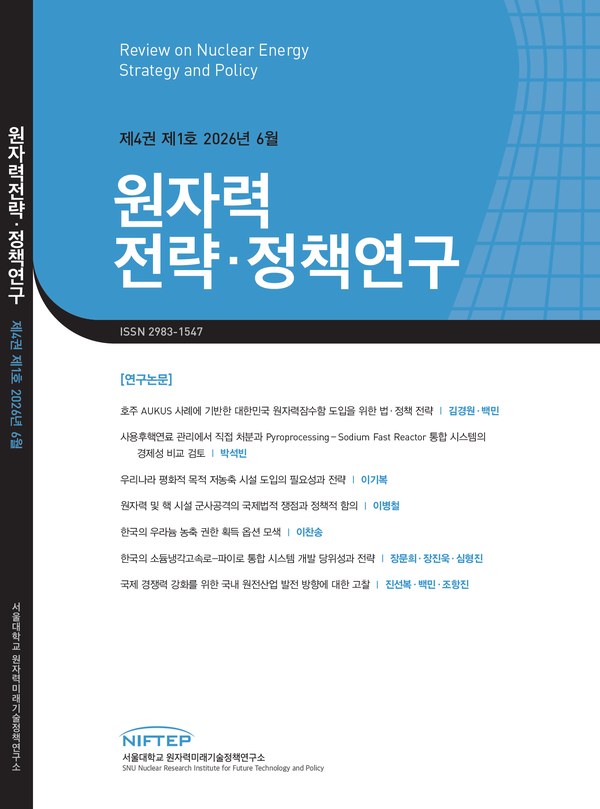
게재가 확정된 논문의 원문은 발간과 동시에 무상으로 공개합니다. 로그인이나 회원 가입 없이 연구소 홈페이지에서 해당 호 발간본을 내려받아 보실 수 있습니다. (발행 및 투고 규정 제13조 제5항)
제4권 제1호 · pp. 83-102 · 발행기관 서울대학교 원자력미래기술정책연구소
같은 호에 실린 다른 논문
- pp. 1-30김경원, 백민
- pp. 31-63박석빈
- pp. 65-81이기복
- pp. 103-116이찬송
- pp. 117-142장문희, 장진욱, 심형진
- pp. 143-160진선복, 백민, 조항진